On the Connection to Culture
Culturally, it’s my belief that we are barren. We being Americans, of course, because everyone else has thousands of years of architecture and tradition and unity to define who they are as people and we have a few hundred years of bloodshed and a lot of good media.
We’re at an odd place. It might be considered a crossroads, if it weren’t for all of the litigation; so much is derivative, we’ve stopped creating to express in order to impress. Perhaps that’s my cynicism talking. In my mind, profitability slowly murdered art. I’d give anything to travel 1000 years into our future to witness what the lecture halls of anthropologists would say of American Society, and what it stood for— how we became the main exporters of entertainment, but that even those products would be derivative and innovation would be ignored due to ignorance and misunderstanding. Perhaps that’s what they say of all art… but they will say that we culled without consideration to our environment.
I find myself connected to the things that existed before us. That our expression has become muddled by the constant beating of the drum of the shame of non-conformity and non-participation of what’s in the moment. Is it shame anymore? Or is it just the lack of attention? I used to enjoy scrolling TikTok, getting little pieces of life; seeing some genuine art being made. Then it would become a deluge of people doing anything to trick you into engaging with their content.
Content and Engagement are our currencies now. The ones in power still deal in money and influence, but they endowed us these toys to with which to occupy ourselves: concepts of importance still built on that human desire to be observed. It’s fascinating to see what that road leads to. It’s depressing to see what that road leads to.
It’s not that I’m innocent of any of this engagement, mind you. I’m just as stuck in the mud. I sometimes stand on the roof of the car looking out to see if there’s something that I’m missing. I find the view barren. Community was something built on dependence and care, and we’ve outsourced a lot of that. You can very much live alone now, even if you live in a city of millions. My personal experience with a local community of a very small and mostly elderly town is that most here have already settled on a side of a particular fence and there aren’t many people willing to rock that boat.
No one tells you how difficult it will be to have friends when you’re an adult, especially since the concept of the third space has gone to sleep— it will be back, I can guarantee that. But it is hard. Because we’re all so enclosed now. So tight. Glued to our phones. Stuck to our routines. And most of us don’t care to change anything because… well, it’s hard. And it’s scary. And it requires introspection.
That introspection makes me aware of what I believe we’re missing, on the whole.
In the game Ghost of Yotei, the Ainu people feature regularly. If you aren’t aware of the Ainu people, I’m not an expert on this subject matter but they are an indigenous people of Northern Japan and Southeastern Russian who were forced from their lands and made to integrate into incoming conquering societies. Anything more I could say wouldn’t do them justice as a people, but they were included as part of the cultural and political landscape of the game during the time period.
During that game, you play a character who lives in search of ultimate revenge for things done to her and her family when she was a child. Seeking to destroy, so that she cannot be hurt again, so that some sense of justice can be found. In that game you find a stubborn Ainu woman whose role is changing in their community and she’s finding difficulty with it. Together, you discover a bear cub whose mother is killed in a rock slide and immediately your companion knows that she needs to take the cub to her community because they believe in the sanctity of that life: Kim-un-kamuy, a god spirit in a bear.
They know that they’ll allow the cub to live with them. And the elders each promise the cub something they can provide: food so that he’ll never feel unsafe, love and attention, and a home where he’ll be treated like family. And then they’ll end his life when he comes to an age when he’d be dangerous to the people, knowing that they were able to extend his life and let him live in comfort because he could not be raised to be a bear, and would not be able to be a human.
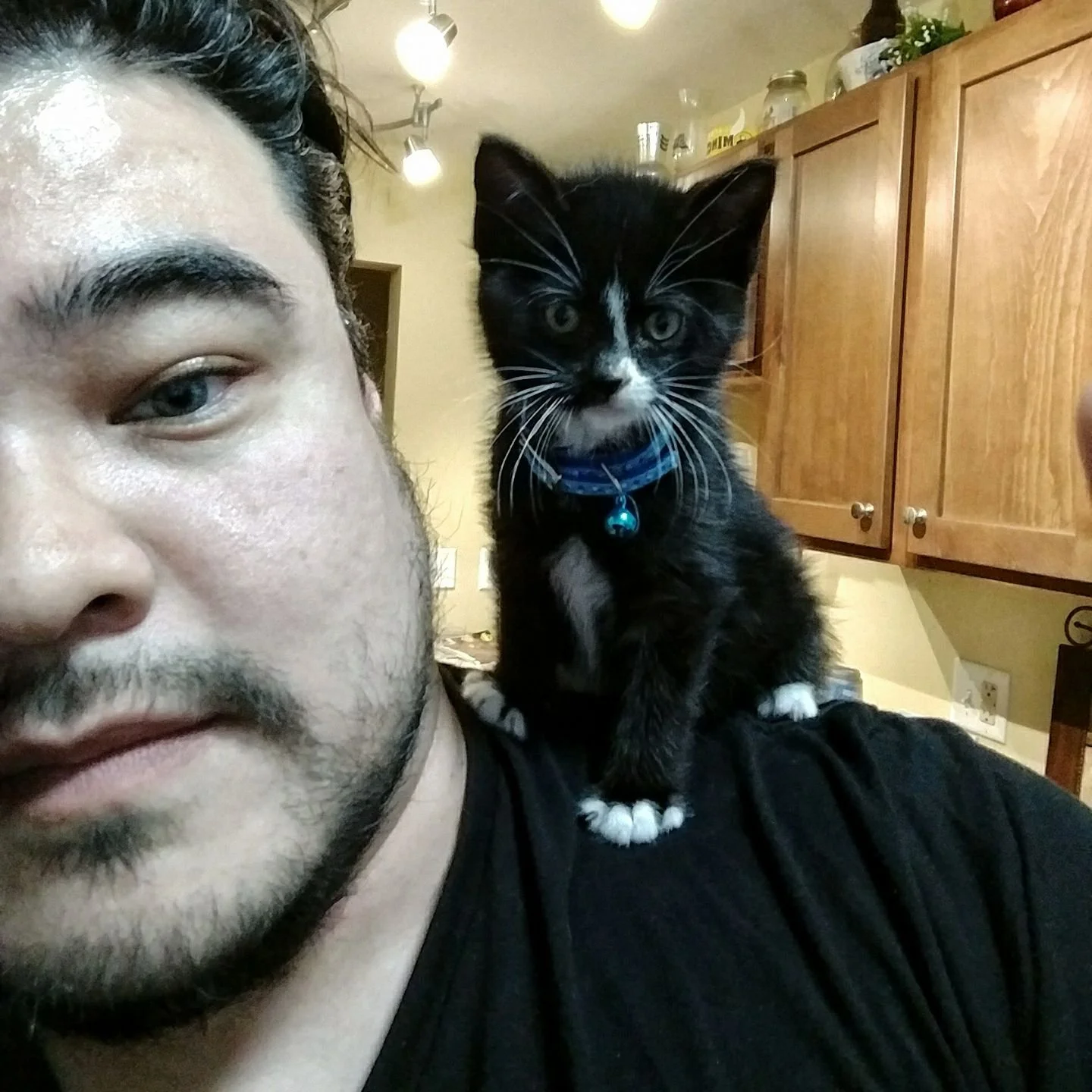
It touched something deep within me to witness this, even in a game. The concept that we could shepherd an animal through a good life via domestication isn’t something that we’re alien to; I’m currently sitting next to a cat who has never known struggle since he was found at around 4 or 5 weeks old. But taking him on was a personal choice, not a communal responsibility. Not a cultural touchstone. There are other people around who would want to help, but it’s not an honor, it’s a burden.
When I stand on that jeep, stuck in the in mud, and look around and see what really defines us culturally, it’s difficult not to remember the cutthroat, dog-eat-dog aphorisms that the rich repeat to us on our media— because they’re constantly being repeated to us as reasons why we’re not enough, why we will never have enough.
I look back at the cultures that I do find my heart connecting with, the ones that bring tears to my eyes. They believed in having enough. In sharing. They’re dying or gone. Because someone else didn’t have enough.